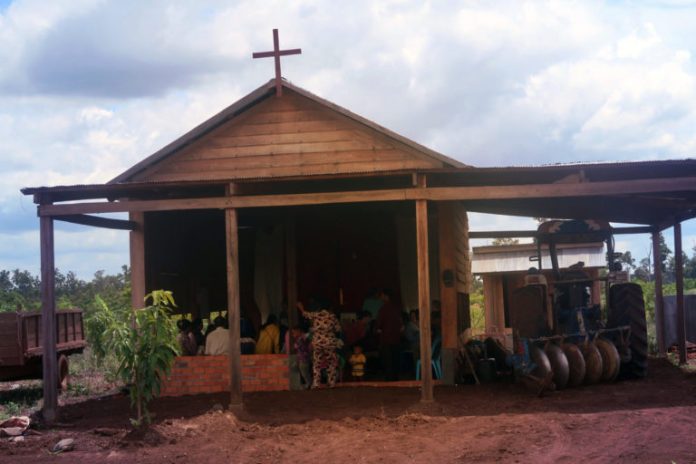

Field Strategy Coordinator
The Southeast Asia field is committed to partnering with God. We seek to disciple churches in the model of Acts 2:42-47. They devoted themselves to the apostles’ teaching and to fellowship, to the breaking of bread and to prayer. Everyone was filled with awe at the many wonders and signs performed by the apostles. All the believers were together and had everything in common. They sold property and possessions to give to anyone who had need. Every day they continued to meet together in the temple courts. They broke bread in their homes and ate together with glad and sincere hearts, praising God, and enjoying the favor of all the people. And the Lord added to their number daily those who were being saved. Acts 2:42-47
Southeast Asia is one of the most diverse areas in the Asia Pacific Region. From the ultra-modern city of Bangkok, Thailand, to the country of Cambodia, where the ravages of genocide still haunt almost every aspect of culture, the people of Southeast Asia live in a wide variety of economic and social circles. But in the midst of this diversity, Buddhism, the dominant religion, is one thing that unites the countries of Southeast Asia. The culture of Buddhism is highly integrated into all aspects of society, political, social, and economic, and it is this religious culture that presents the greatest challenge to the advancement of the Kingdom of God.
Yet we believe God is working even amid these circumstances. He has a plan for restoration, and Nazarene Missions is a part of that plan! Our goal is to make Christlike disciples (Matthew 28:18-20) and to follow the example of our Good Shepherd (John 10:11-15) by sacrificing themselves for the Lost.
Christians here are encouraged to view the world as John Wesley did when he said, “I look upon all the world as my parish,” and to plant a community of believers wherever they are.
Thank you for partnering with Nazarene Missions and the Southeast Asia Field. Together we will see God’s Kingdom come in Southeast Asia!
Officially established in 1992
Cambodia has a population of around 17 million people and is predominantly influenced by Theravada Buddhism. The country’s history and culture are deeply shaped by tradition, community life, and resilience.
The Church of the Nazarene in Cambodia continues to grow through compassionate ministry, community outreach, and discipleship. The church is committed to sharing the message of holiness while responding to both spiritual and practical needs, especially among younger generations and developing communities.
The Cambodia District was first organized by a local pastor who migrated to the USA.
The SEANBC extension program began to support leadership and ministry training.
The first work was not very successful due to social and political conditions.
The district, which consisted of 13 churches, was reorganized by Rev. Rolf and Debbie Kleinfeld and local leaders.
The district grew to 62 churches, becoming the fastest-growing district in Southeast Asia.
The church continues to grow under district leadership, with ongoing disciple-making ministries.
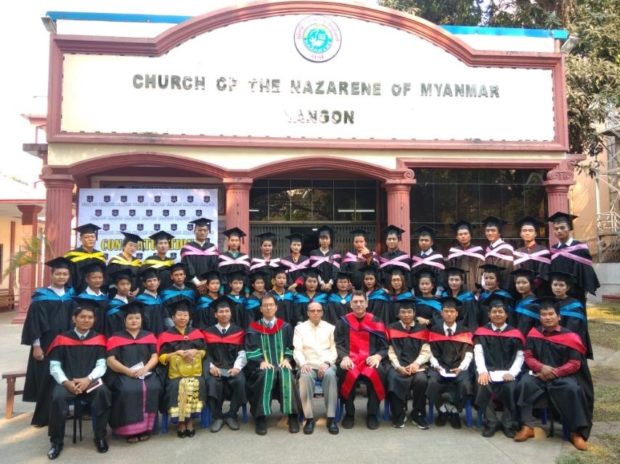
Dr. Robin H. Seia and his family began the work on July 15, 1983, upon arriving from the USA. The first Pioneer District Assembly was held on March 28, 1984, under Dr. William Greathouse, Jurisdictional General Superintendent, and Dr. Donald D. Owens, Regional Director.
At the second District Assembly, four local churches were fully organized in Yangon, Bassein, Aungthapyi, and Tahan with 400 members. The Church of the Nazarene was officially registered with the government on August 15, 1984 (Reg. No. 1554), confirmed by the District Assembly as the founding date of the Church of the Nazarene in Myanmar. Dr. Robin Seia served as DS for 32 years, from 1984 until 2016.
In 2016, there were 22 established churches in Myanmar and a SEANBC (now Chapman International College) residential campus in Yangon. Dr. Donghwan (Bill) Kwon was appointed 2nd DS. in March 2016. In 2017, the
Myanmar District was approved to become a Phase II district, and in 2018 the Myanmar District gave birth to a new Phase II district: the Myanmar Southern District. At the same time, the Myanmar District pioneered two mission areas; Mandalay Pioneer area in 2018 and Northern Rakhine State in 2019.
That year, the Myanmar district changed its name to Myanmar Northwest District, and Rev. Lal Pek Mawia (Peka) was appointed the third DS. In 2020, Myanmar Northwest has 21 organized churches.
Dr. Robin H. Seia and his family began the work on July 15, 1983, upon arriving from the USA. The first Pioneer District Assembly was held on March 28, 1984, under Dr. William Greathouse, Jurisdictional General Superintendent, and Dr. Donald D. Owens, Regional Director.
At the second District Assembly, four local churches were fully organized in Yangon, Bassein, Aungthapyi, and Tahan with 400 members. The Church of the Nazarene was officially registered with the government on August 15, 1984 (Reg. No. 1554), confirmed by the District Assembly as the founding date of the Church of the Nazarene in Myanmar. Dr. Robin Seia served as DS for 32 years, from 1984 until 2016.
In 2016, there were 22 established churches in Myanmar and a SEANBC (now Chapman International College) residential campus in Yangon. Dr. Donghwan (Bill) Kwon was appointed 2nd DS. in March 2016. In 2017, the
Myanmar District was approved to become a Phase II district, and in 2018 the Myanmar District gave birth to a new Phase II district: the Myanmar Southern District. At the same time, the Myanmar District pioneered two mission areas; Mandalay Pioneer area in 2018 and Northern Rakhine State in 2019.
That year, the Myanmar district changed its name to Myanmar Northwest District, and Rev. Lal Pek Mawia (Peka) was appointed the third DS. In 2020, Myanmar Northwest has 21 organized churches.
The Myanmar Northern was organized by the pioneering work of Rev. Samuel Yangmi among the Lisu people group. On April 20, 1997, the first District Assembly was held in the city of Myitkyina with 5 pastors and 130 members. In 1999, the 5 founding pastors received district licenses. In 2012, the district grew to 8 churches, 14 pastors, and 500 members. In 2007, SEANBC chancellor, Rev. Kent Pelton, introduced SEANBC extension classes, beginning with 20 students. The first class graduated in 2016 with 27 graduates. Soon after the graduation, 5 pastors received ordination. In 2017, 32 pastors received district licenses. Currently, there are 10 established churches. Rev. Sam Yangmi served as DS until his retirement in 2019. In 2020, Rev. Phu Sar Yai was appointed the first Lisu DS.
Beginnings in 1964 – Officially established in 1984
Myanmar has a population of over 50 million people, with Buddhism as the dominant religion alongside various ethnic and cultural traditions. The nation is diverse, with many languages and people groups.
The Church of the Nazarene in Myanmar ministers across different communities, often in challenging contexts. It focuses on discipleship, leadership development, and strengthening local churches, while faithfully sharing the gospel in both urban and rural areas.
Dr. Robin H. Seia and his family began the work upon arriving from the USA.
The first Pioneer District Assembly was held under Dr. William Greathouse and Dr. Donald D. Owens.
The Church of the Nazarene was officially registered with the government, marking the founding of the church in Myanmar.
Four local churches were organized in Yangon, Bassein, Aungthapyi, and Tahan with 400 members.
The Myanmar Northern work began among the Lisu people, with the first District Assembly held in Myitkyina.
SEANBC extension classes began, leading to trained leaders, graduates, and ordained pastors.
The district grew to 8 churches, 14 pastors, and 500 members.
There were 22 established churches, and Dr. Donghwan (Bill) Kwon was appointed as District Superintendent.
Myanmar became a Phase II district, gave birth to the Myanmar Southern District, and opened new mission areas.
Myanmar Northwest District had 21 organized churches, and new leadership was appointed across districts.
The Church of the Nazarene in Myanmar continues to grow through multiple districts, churches, and ministries.
As a result of the generous giving of the Japan District Church of the Nazarene, the denomination entered Thailand in 1989, with two missionary families: Michael and Rachel McCarty, and Richard and Jean Knox. The Thailand District was organized in 1990 with two churches: Bangkok First Church and the Khmer church in Surin (which later dissolved when refugees returned to Cambodia). Michael McCarty was the first DS of the Thailand District from 1990-1993, and the Bangkok First Church was officially organized on Pentecost Sunday, 1991. Siripawn Malagul was a charter member. In 2010, there were five organized churches and three preaching points. In 2020 there are seven established churches (including 2 Myanmar churches) and at least seven preaching points. District Superintendents have included: Dr. Michael McCarty, Rev. Richard Knox, Dr. Daniel Saengwichai, Rev. Sawat Hahom, and Rev. Tanongsak Pong ‘oodta (current).
The Northern Thailand District was organized in 1994 with five Lahu churches and several preaching points through the pioneering work of Rev. Samuel and Mrs. Lumae Yangmi (and Julie, Nellie, Samantha, and Anzie) who joined the Church of the Nazarene in 1993. The five churches they had started in Northern Thailand: 1) Huay Tat 2) Pasak, 3)Payang, 4)Nong Wua Daeng, 5) Huay Luang joined the Church of the Nazarene in 1994 as the Northern Thailand District. SEANBC established a residential program in 2004, building on the campus of the MaeTang Children’s Home. In 2020 there are 16 established churches and multiple preaching points in the N. Thailand district. District Superintendents have included: Rev. Samuel Yangmi, Rev. Benjamin (the first Lahu DS), Rev. Kent Pelton, Rev. Lasoe Jasa, and Rev. Anusorn (Simon) Saengbenjatam (current).
Officially established in 1989
Thailand has a population of around 70 million people and is largely shaped by Theravada Buddhism, which strongly influences its culture, values, and daily life.
The Church of the Nazarene in Thailand continues to serve through church planting, relational ministry, and community engagement. Despite being a minority, the church is actively involved in sharing the message of holiness and building Christlike disciples in a culturally rich and spiritually open society.
The Church of the Nazarene entered Thailand through missionary families sent with support from the Japan District.
The Thailand District was organized with two churches: Bangkok First Church and a Khmer church in Surin.
Bangkok First Church was officially organized on Pentecost Sunday.
The Northern Thailand District was organized with five Lahu churches through pioneering work among local communities.
SEANBC established a residential program to train leaders for ministry.
There were five organized churches and three preaching points in Thailand.
Thailand District had seven established churches and multiple preaching points, while Northern Thailand had 16 established churches.
The Church of the Nazarene continues to grow in Thailand through church planting, leadership, and active ministries.

Congregational Partnership
Districts and churches partnering with a town or local church or country on the mission field to plant a church or grow and support ministry there.
Field Partnership
People who are interested in a specific part of the world and get together with others and do missions
Interest-based Partnership
People using hobbies and gifts to reach people for Christ. For example, technical people helping to educate and bring schools and churches up to date. Training for pastors and leaders via technology.)
1. Common agreed-upon agenda
We focus on having an equal partnership with local leaders. This helps to avoid dependency and paternalism (our culture imposed on others). We aim to avoid prioritizing a Western view of theology.
2. Work on things together with locals
This can be slower, but it’s a global church from Paul’s passage on the body, 1 Corinthians 12:12-31. The purpose of maturity is NOT independence but interdependence. What does the Western/Korean/etc. What does the church need from the majority world church? Missions are not US to THEM; it is reciprocal. Teams go both ways! We cannot give without receiving. We NEED each other!
3. Work toward clear quality communication between all partners
We look for cultural brokers, someone who knows both sides. (For an American partnership, the cultural broker must be an American who lives in and understands the host culture. A local who speaks English and has visited America is not able to be a true cultural broker. The best cultural broker is almost always a local missionary. This was tested in Africa and we have seen the same thing in SE Asia.)
4. Focus on God’s mission
Regardless of the activity, our mission is to build the Church.
5. Work with a backbone organization for coordination and support.
It keeps our efforts going in the same direction as the missionary works that are already in place.
If you would like to understand the direction of the SEA Field, these documents and videos are for you. Dr. Kwon shares his vision for the field. Please read through the document, watch the video, and pray for our field as we attempt to implement this plan.